

Rare earth high-tech zone companies leverage AI to enhance the efficiency of magnetic material production and inspection.
In today's rapidly advancing wave of technological innovation, companies in the Rare Earth High-Tech Zone are actively embracing artificial intelligence (AI) technology, injecting fresh momentum into the production and inspection processes of magnetic materials—and driving efficiency to new heights.

In today's rapidly advancing wave of technological innovation, companies in the Rare Earth High-Tech Zone are actively embracing artificial intelligence (AI) technology, injecting fresh momentum into the production and inspection processes of magnetic materials—and driving efficiency to a whole new level of excellence.
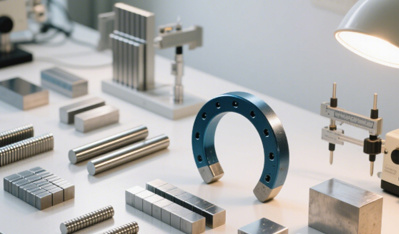
Walking into the production workshop of Baotou Yongzhen Jingping Magnetic Materials Technology Co., Ltd., you’ll witness AI-powered intelligent quality-inspection robots working diligently and efficiently. Inside the workshop, photoelectric sensors constantly flash as the rare-earth flat magnetic steel products roll off the assembly line—quickly sorted by the robots into two categories: pass or fail—and then swiftly transported to designated areas. In no time at all, the inspection of an entire batch is completed. Though the company’s magnetic materials are compact in size, their tolerance standards for outer diameter, inner control dimensions, and thickness are exceptionally stringent. Previously, these inspections relied entirely on manual labor and human visual identification, resulting in painfully slow and inefficient processes. However, over the past two years, the company has gradually introduced a series of AI-driven quality-inspection systems, delivering remarkable results. Not only have product inspection errors dropped by more than 80%, but the company has also significantly reduced its reliance on manual labor. These AI-powered quality-inspection robots combine cutting-edge photoelectric detection technology with state-of-the-art image recognition capabilities. Built upon advanced deep neural networks, their sophisticated visual recognition system can rapidly assess critical parameters such as size and surface appearance for magnetic steel products—ensuring precision and consistency while dramatically cutting production costs and enhancing overall product quality.
Keywords:
Related News



Jin Di
Phone:
E-mail:
Leave a Message Online